




Humanoid Robots Are Moving From Imagination to Reality — But Not in the Way We Expect

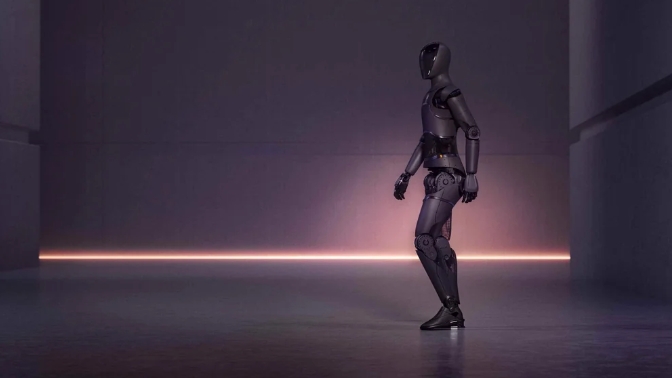
As technology continues to evolve from autonomous vehicles toward automated machines, humanoid robots are gradually moving from concept to reality. However, one key judgment must be made clear from the outset:
In the short term, humanoid robots will not enter ordinary households, but they are far more likely to appear first in factories and industrial environments.
Understanding this point is essential to understanding the current state of the humanoid robotics industry.
Why Humanoid Robots Are Finally Worth Taking Seriously
For decades, robots have lived primarily in movies and speculative predictions, rarely making their way into everyday reality. The reason is straightforward:
technology was fragmented, costs were prohibitive, and viable use cases did not exist.
Today, those conditions are changing simultaneously.
- Autonomous driving has accelerated the maturity of perception and decision-making algorithms
- The electric vehicle industry has scaled motors, batteries, and control systems
- Industrial automation has accumulated decades of reusable engineering experience
For the first time, humanoid robots are no longer built on technologies developed solely for robots. Instead, they are beginning to reuse mature industrial supply chains.
From “Walking” to “Working”: Functional Capabilities Are Becoming Practical
Modern humanoid robots are no longer limited to demonstrating movement. Increasingly, they are being designed to perform real tasks.
At present, their capabilities are converging around three practical categories:
- Transporting, sorting, and inspecting items in factory environments
- Performing repetitive operations in warehouses
- Collaborating with humans in structured workspaces
Functional Focus of Representative Humanoid Robots
| Model | Core Strengths | Closest Role |
|---|---|---|
| Tesla Optimus | Grasping, lifting, learning | General-purpose worker |
| Boston Dynamics Atlas | Dynamic balance, complex motion | Engineering platform |
| Xiaomi CyberOne | Interaction and demonstration | Technology prototype |
| Honda ASIMO | Stable locomotion | Research benchmark |
This highlights an important reality:
today’s humanoid robots resemble “mobile industrial equipment” far more than “human-like companions.”
Costs Remain High, but Structural Pressure Is Easing
Current estimates place the hardware cost of an early-stage humanoid robot at approximately $40,000.
Estimated Hardware Cost Breakdown
| Component | Estimated Cost |
|---|---|
| Sensors and chips | $10,000 |
| Servo motors and drivers | $10,000 |
| Precision reducers | $8,000 |
| Inertial and force sensors | $5,000 |
| Battery and control systems | $2,000 |
| Structural components and materials | $5,000 |
| Total | ≈ $40,000 |
The critical point, however, is this:
the path to cost reduction is now visible.
- Motors and batteries benefit from electric vehicle scale
- Sensors and chips are driven by autonomous driving demand
- Control systems increasingly shift value from hardware to software
What remains difficult to reduce is mechanical precision and long-term reliability.
Sales Will Not Explode — But an Inflection Point Is Approaching
At present, the deployment pattern of humanoid robots is already quite clear:
| Scenario | Current Status |
|---|---|
| Research labs | Established presence |
| Industrial pilots | Rapidly increasing |
| Commercial demonstrations | Brand-driven |
| Households | Not yet viable |
This stage strongly resembles electric vehicles around 2010:
technically feasible, but not yet economically compelling at scale.
A true inflection point is likely to emerge when:
- Industrial return on investment is validated
- Unit costs fall below $20,000
- AI enables “train once, deploy many” learning models
Conclusion: Humanoid Robots Are Not a Fantasy, but a Slow-Burning Transformation
The slow progress of humanoid robots is not due to a lack of importance, but rather because they attempt to replicate the most complex combination of human abilities.
They will not suddenly appear in living rooms.
Instead, they are far more likely to quietly take positions in factories, warehouses, and production lines.
If electric vehicles answered the question of how machines move,
then humanoid robots must answer a far more fundamental one:
Can machines become a form of general-purpose labor?
The answer will not arrive overnight,
but it is becoming clearer step by step.