



How Do Food Service Robots Deliver Meals Autonomously? And Do They Really Change Restaurants?

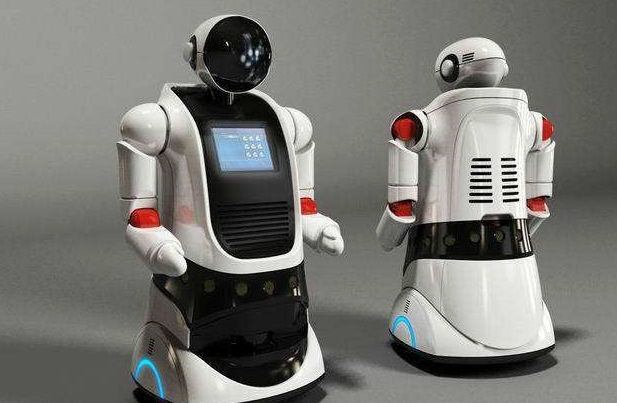
If you’ve visited a shopping mall, hotel, or large chain restaurant in the past couple of years, chances are you’ve seen a food delivery robot:
a rounded base, stacked trays, moving slowly through the dining area, stopping at a table and politely announcing, “Your meal has arrived.”
The first time, it feels novel.
After seeing it a few times, a more practical question usually comes up:
Is this actually useful, or is it just a gimmick?
To answer that, we need to understand two things:
how these robots really manage to deliver food on their own, and why restaurants are willing to pay for them.
Food Delivery Robots Didn’t Appear Overnight
It’s easy to think restaurant robots are a recent invention, but their development started much earlier.
More than a decade ago, companies in the U.S. and elsewhere were already experimenting with delivery robots. Back then, the technology wasn’t ready, and most projects stayed in the testing phase. The real shift came later, driven by two factors:
first, technologies related to autonomous driving became more mature;
second, restaurants began feeling sustained pressure from labor shortages.
After 2020, many restaurant operators were forced to ask a hard question:
If we suddenly have fewer staff, can the restaurant still function?
In that context, delivery robots stopped being “fun experiments” and started being evaluated as practical labor support tools.
So How Do These Robots Actually Deliver Food on Their Own?
Without diving into technical jargon, there’s a simple way to understand it.
Robots Aren’t “Smart”—They’re Extremely Rule-Driven
When a robot is first deployed, it does something crucial:
it learns the restaurant layout.
It identifies:
- where the kitchen is
- where tables are located
- which areas are off-limits
After that, it doesn’t improvise routes on the fly. It operates within a fixed internal map.
Think of it like walking around your own home at night.
You’re not guessing—you already know the layout.
Why Does It Move Slowly but Rarely Cause Problems?
You may have noticed that food delivery robots aren’t fast. Sometimes they even seem overly cautious.
That’s intentional.
In a restaurant, safety and reliability matter more than speed. If someone steps into its path, a chair moves, or a passage narrows, the robot will slow down or stop rather than push through.
Many restaurant managers eventually describe it the same way:
“It’s not fast, but it doesn’t cause trouble.”
And in daily operations, that consistency matters.
One Job Only—and That’s Why It Works
Most food service robots are deliberately limited in what they do.
Their role is simple:
carry food from the kitchen to the table.
They don’t take orders, make recommendations, chat with customers, or handle complaints.
By keeping the task narrow, reliability stays high.
Why Are Restaurants Willing to Pay for Robots?
If you ask restaurant owners, their reasons are usually very practical.
First, Robots Help Absorb Peak-Hour Pressure
Meal rushes are when delivery becomes physically exhausting and mistakes happen.
Staff have to walk long distances, carry heavy trays, and respond to customers all at once. Robots can handle repeated back-and-forth trips, taking on the most physically demanding part of the job.
Many operators say the biggest improvement isn’t speed—it’s that peak hours feel less chaotic.
Second, Staff Can Focus on Higher-Value Work
Delivering food itself doesn’t create much experience value.
What customers remember more is:
- clear communication when ordering
- proper pacing of dishes
- how problems are handled
When robots take over repetitive delivery tasks, staff can focus on these areas instead.
Third, Long-Term Costs Are Easier to Predict
Robots don’t call in sick, get tired, or quit unexpectedly.
For chain restaurants, hotels, and cafeterias, they function like equipment:
a one-time investment with a predictable usage cycle.
As long as foot traffic and usage stay stable, the payback period can be estimated in advance.
Of Course, Robots Have Clear Limitations
It’s important to be realistic.
They Struggle with Constantly Changing Situations
Examples include:
- customers switching seats
- tables being merged
- children running unpredictably
Humans handle these easily. Robots do not.
Upfront Costs Are Still a Barrier for Small Restaurants
For small, independent restaurants with unstable traffic, robots may never fully pay for themselves—especially if the restaurant relocates or closes before reaching break-even.
That’s why robots are far more common in malls, hotels, chains, and cafeterias than in street-side eateries.
Service Experience Still Depends on People
Robots can deliver food.
They can’t read emotions or adapt socially.
A genuinely good dining experience still relies on human interaction.
Which Restaurants Benefit Most from Robots?
Scenario × Value Comparison Table
| Scenario | Practical Value | Recommended | Why |
|---|---|---|---|
| Large mall restaurants | Very high | ✅ Strongly recommended | Long routes, steady traffic |
| Hotel restaurants | High | ✅ Recommended | Emphasis on stability and contactless service |
| Chain fast food | Medium–high | ✅ Recommended | Highly standardized workflows |
| School / corporate cafeterias | Very high | ✅ Strongly recommended | Predictable peak hours and fixed routes |
| Small street restaurants | Low | ❌ Not recommended | Costs hard to amortize |
| High-end fine dining | Low | ❌ Not recommended | Experience depends heavily on staff |
Are Robots Replacing Human Workers?
Based on real-world usage, a more accurate description would be:
Robots replace repetitive physical labor—not service itself.
They help restaurants:
- reduce physical strain
- stabilize peak-hour operations
- allocate staff more efficiently
They are not creating fully staff-free restaurants.
Final Takeaway
The real value of food delivery robots isn’t whether a restaurant has them,
but whether they’re used in the right place and for the right role.
They aren’t the star of the restaurant.
But in the right setting, they’ve proven to be a reliable supporting player.
In short:
Robots aren’t there to make restaurants look futuristic
they’re there to help restaurants survive real-world pressure.