


A Review of Fundamental Theories, Classical Methods, and Emerging Trends in Artificial Intelligence for Medical Imaging

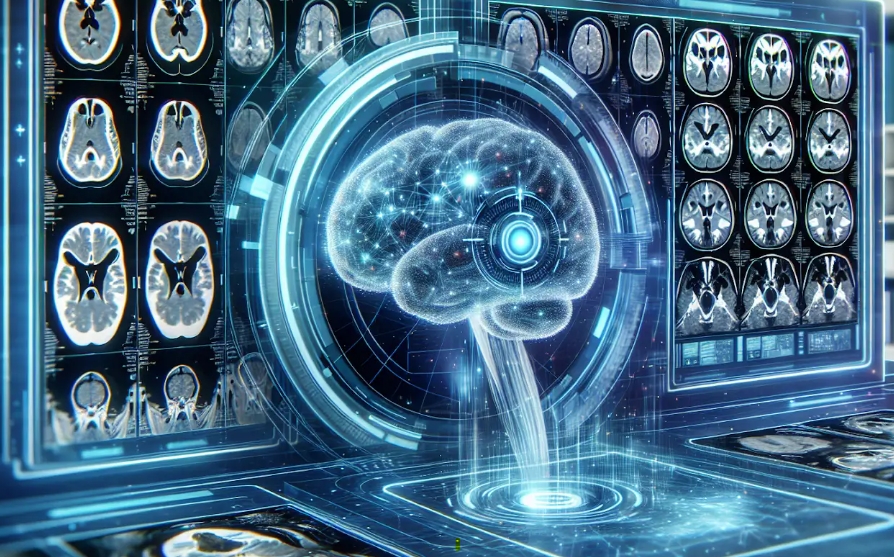
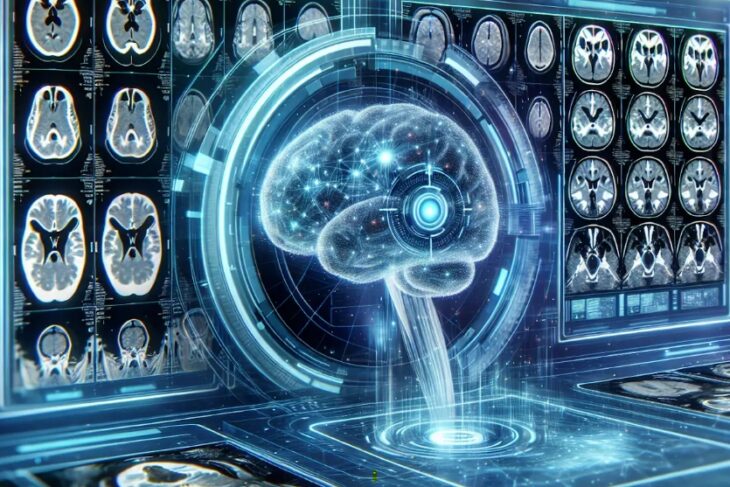
Artificial intelligence (AI) has become a major driving force in transforming the paradigm of medical image analysis. In recent years, deep learning, generative artificial intelligence, and foundation models have achieved remarkable progress in medical imaging; however, their theoretical foundations, methodological applicability, and clinical translation remain subjects of ongoing debate. Based on a systematic review of recent literature, this paper summarizes the core theoretical frameworks and classical methods of AI in medical imaging, with a particular focus on comparative analyses of different models across representative imaging tasks. Advances in cancer diagnosis, personalized medicine, and multimodal imaging are reviewed, while key challenges related to data privacy, model interpretability, and clinical deployment are critically discussed. Finally, actionable future research directions are proposed. This review aims to provide a comprehensive reference for both methodological research and clinical translation of AI in medical imaging.
Medical imaging plays an indispensable role in disease diagnosis, treatment planning, and therapeutic monitoring. Conventional image interpretation relies heavily on expert experience, which is time-consuming and subject to inter-observer variability. With the rapid growth of medical imaging data and advances in computational power, artificial intelligence particularly deep learning—has emerged as a promising solution for automated and quantitative image analysis.
In recent years, research paradigms have gradually shifted from task-specific model optimization toward system-level intelligence driven by foundation models, multimodal learning, and physics-informed approaches. While these advances have significantly improved model performance, they also raise new challenges regarding reliability, interpretability, and clinical applicability. Therefore, a systematic and critical review of the theoretical foundations, classical methods, and developmental trajectories of AI in medical imaging is both timely and necessary.
2. Literature Search Strategy and Scope
To enhance methodological rigor and reproducibility, a structured literature search was conducted using PubMed, Web of Science, and Scopus databases. The search covered publications from 2018 to 2025, using keywords including “medical imaging artificial intelligence,” “deep learning,” “foundation models,” “multimodal imaging,” and “physics-informed AI.”
Inclusion criteria were as follows: (1) peer-reviewed journal articles; (2) studies focused on AI methodologies or applications in medical imaging; and (3) papers providing explicit methodological descriptions or experimental validation. Emphasis was placed on recent representative reviews and methodological studies to ensure both relevance and academic significance.
3. Research Hotspots and Technological Trends
3.1 Major Research Directions
Table 1. Major research directions in AI for medical imaging
| Research direction | Typical tasks | Key advantages | Major challenges |
|---|---|---|---|
| Cancer imaging analysis | Detection, segmentation, staging | High diagnostic efficiency | Limited generalization |
| Multimodal image fusion | CT + MRI + PET | Complementary information | Complex fusion strategies |
| Physics-informed AI | Image reconstruction | Improved trustworthiness | High modeling complexity |
| Digital twins | Therapy simulation | Strong personalization | Large data requirements |
| Radiology foundation models | Report generation | Reduced workload | Regulatory concerns |
Cancer-related imaging remains the most intensively studied area, while foundation models and generative AI are reshaping traditional task-driven research paradigms.
3.2 Technological Evolution Trends
Current technological development exhibits three prominent characteristics:
(1) a transition from CNN-based models to Transformers and foundation models;
(2) expansion from single-modality imaging to multimodal and multi-omics integration;
(3) a shift from purely data-driven approaches toward trustworthy AI integrating physical and clinical priors.
4. Theoretical Frameworks and Classical Methodologie
4.1 Comparative Analysis of Deep Learning Models
Table 2. Comparison of deep learning models in medical imaging
| Model type | Applicable tasks | Strengths | Limitations |
|---|---|---|---|
| CNN | Classification, segmentation | Mature and stable | Weak long-range modeling |
| GAN | Data augmentation | Alleviates data scarcity | Training instability |
| Transformer | Structural analysis | Global dependency modeling | Data-intensive |
| Foundation models | Multi-task transfer | Strong generalization | High computational cost |
Existing evidence suggests that CNNs remain advantageous for small- to medium-sized clinical datasets, whereas Transformers and foundation models are more suitable for large-scale, multi-task scenarios. However, their clinical deployability requires further validation.
4.2 Multimodal and Multi-omics Modeling Frameworks
Multimodal learning enhances disease characterization by integrating complementary information from different imaging modalities. Further integration with multi-omics data enables linking imaging phenotypes to underlying biological mechanisms. Nonetheless, challenges such as resolution mismatch, temporal alignment, and feature-scale inconsistency remain critical obstacles.
4.3 Physics-Informed and Trustworthy AI
By incorporating imaging physics constraints or prior knowledge, physics-informed AI reduces implausible predictions and improves robustness across scanners and institutions. This approach is increasingly recognized as a foundational component for clinically trustworthy medical imaging AI systems.
5. Clinical Translation and Real-World Challenges
Despite superior experimental performance, the clinical translation of AI models remains limited. Key barriers include:
- Data privacy and regulatory compliance;
- Insufficient model interpretability;
- Integration with clinical workflows;
- Lengthy medical device approval processes.
Currently, only a limited number of AI-based imaging systems have achieved large-scale clinical deployment, highlighting the gap between algorithmic performance and real-world applicability.
6. Research Limitation
Current studies are constrained by several factors:
(1) variability in data quality and imaging protocols;
(2) insufficient large-scale, multi-center validation;
(3) limited assessment of long-term robustness and generalizability.
These limitations restrict the sustainable clinical adoption of AI technologies in medical imaging.
7. Future Research Directions (Focused Perspectives)
- Clinically realistic evaluation frameworks for multimodal AI models
- Explainable deep learning models incorporating physical constraints
- Digital twin–driven personalized treatment planning systems
- Standardized application of generative models for medical image synthesis
- Collaborative decision-making between imaging models and large language models
These directions emphasize translational feasibility rather than incremental performance gains.
8. Conclusion
This review systematically summarizes the theoretical foundations, classical methodologies, and translational challenges of artificial intelligence in medical imaging. Future progress will depend on balancing algorithmic performance, trustworthiness, and clinical usability, thereby enabling the standardized and sustainable deployment of AI in medical imaging practice.